IDT Well

Where everyone else still calculates by hand

Digital twin for wells with complex operating conditions

Reservoir, wellbore, equipment and electrical system are part of a single calculation model. IDT Well uses it to calculate the well's operating mode and adapts the model to field data.

Request a demo
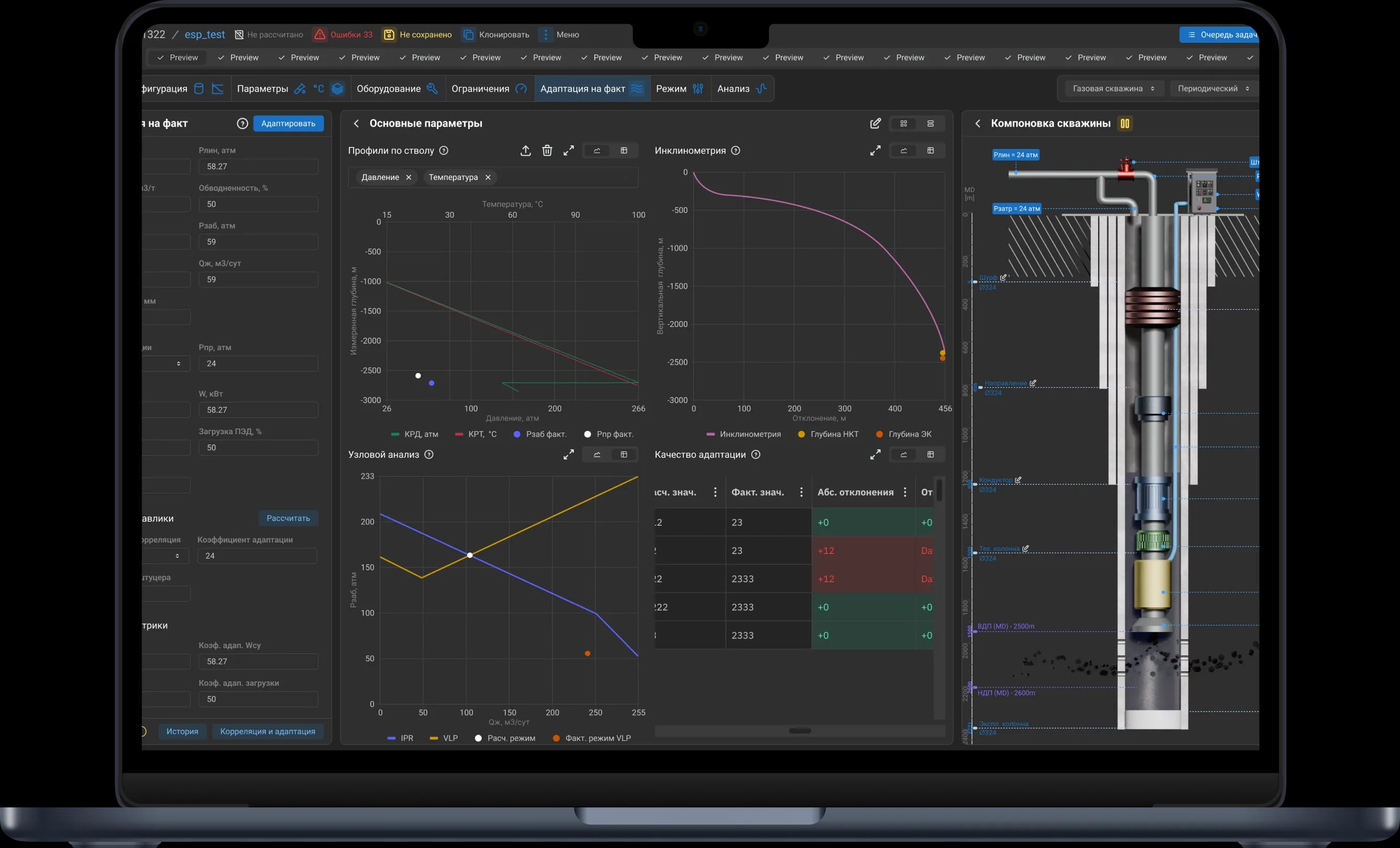
Laptop showing the IDT Well interface calculating an intermittent well's operating mode

Seven modes of operation, including intermittent operation and flow through the annulus

IDT Well calculates gas lift, ESP, flowing, gas and injection wells, intermittent operation (auto-restart, timed cycling, variable-speed control) and flow through the annulus. You describe intermittent operation with a build-up and pump-down cycle, and flow through the annulus with the annulus parameters. Wellbore, reservoir, pump and electrics stay in one model, with no calculations stitched together by hand.

Complications and modes IDT Well calculates

  • Hydrate formation

    The model shows at what depth and under which operating mode the flow enters the hydrate formation zone.

  • Well kill

    The calculation shows at what pressure and water cut the well will die, and which mode brings it back.

  • Tandem pump assemblies

    An assembly of sections with different curves is calculated stage by stage, accounting for gas at each section's intake.

  • Leaking valves

    A leaking check valve is part of the calculation: you see how much liquid falls back into the well per cycle.

  • Slug flow

    The core detects the transition into slug flow and estimates how stable the well is at its current settings.

  • Optimising intermittent cycles

    Build-up and pump-down times are matched to a target rate, without a run of trials on the well.

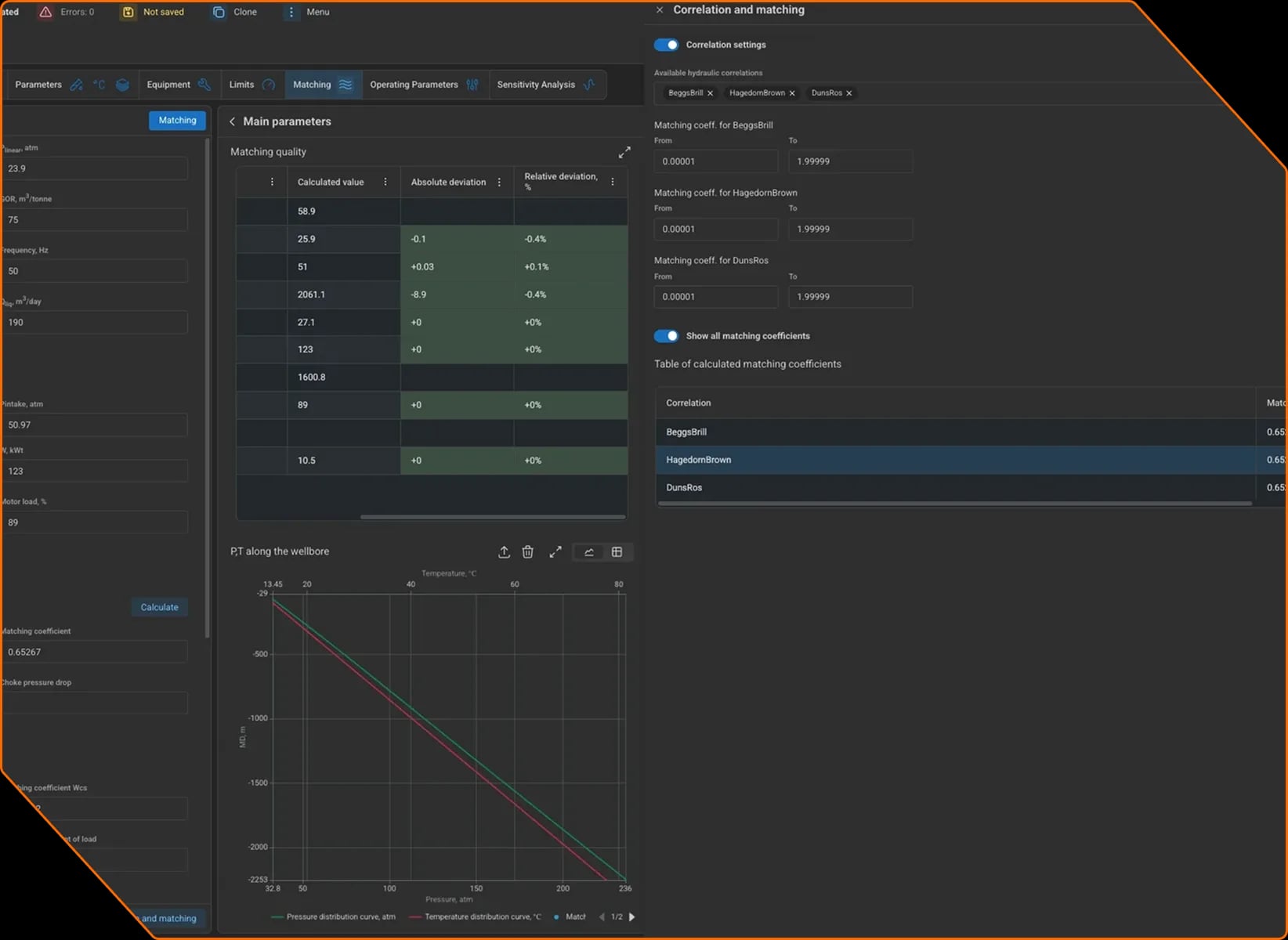
The correlation and matching coefficients panel: ranges and calculated coefficients for BeggsBrill, HagedornBrown and DunsRos

Automatic adaptation to field data

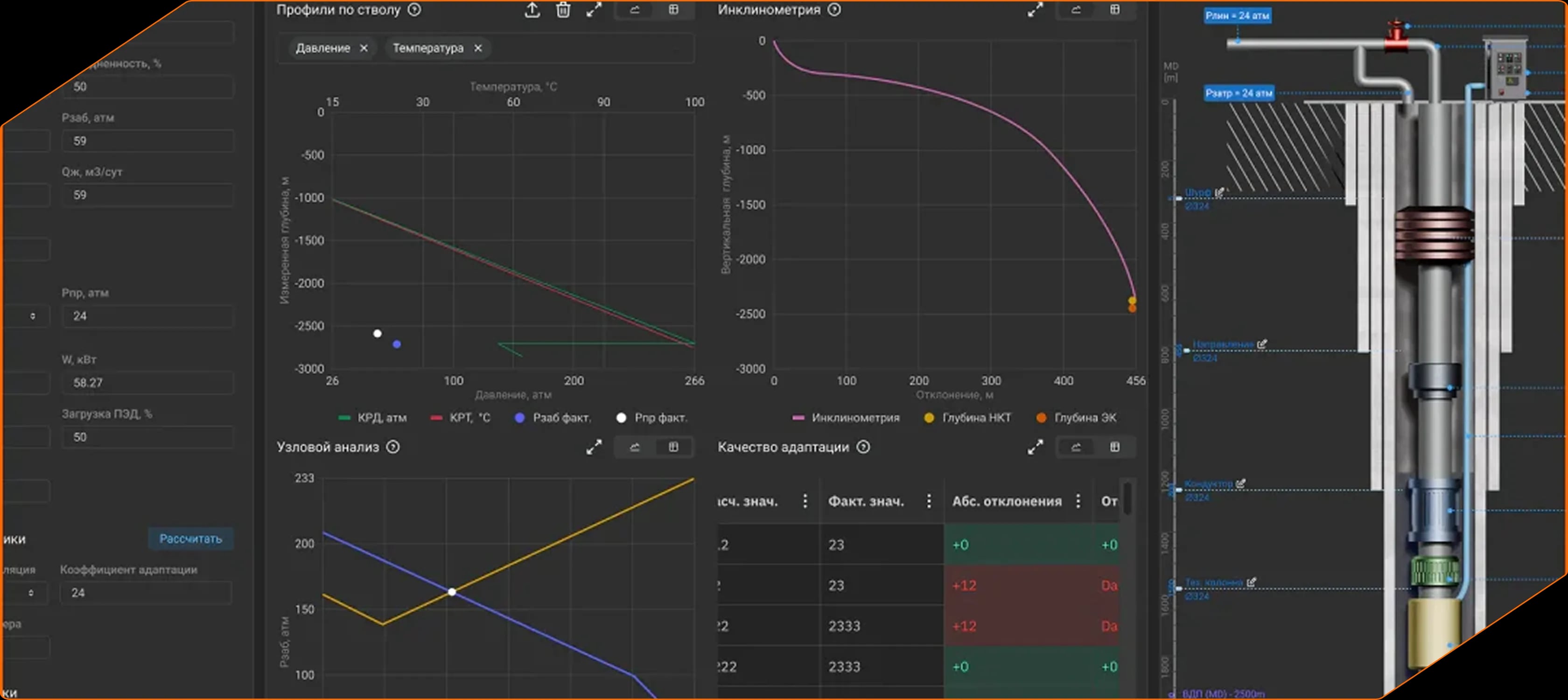
IDT Well tunes the model to measured data automatically, and to several historical points when that is needed. An engineer can also set correlations and matching coefficients by hand.

Six correlations and four calculation modules

IDT Well calculates PVT properties, the inflow performance curve (IPR), nodal analysis of VLP/IPR for steady-state and transient regimes, and sensitivity analysis. Hydraulics: the Gray, Ansari, Hagedorn-Brown, Beggs-Brill and Duns-Ros correlations, plus correlations adapted to industry benchmarks. PVT runs on a black-oil model with 67 correlations for oil, gas and water properties, including wax/asphaltene and hydrate formation. Nodal analysis takes seconds and recalculating a group of a few dozen wells takes minutes (speed varies on the customer's infrastructure). The equipment database includes ESPs, motors, cable, gas separators and gas-lift valves.

Edits and calculations across a whole group of wells at once

Bulk operations

  • Import PVT tables

    Load PVT/black-oil data from Excel or the Eclipse format for several wells at once.

  • Bulk parameter changes

    Edit parameters and recalculate across a chosen group of wells at once, with no re-entering data well by well.

  • Export results

    Export calculation results to Excel from the well analysis form.

  • Model comparison

    Two model versions or two scenarios are compared side by side in one window.

Bulk import and calculation across a group of wells

IDT Well adapts automatically to hydraulic and electrical parameters

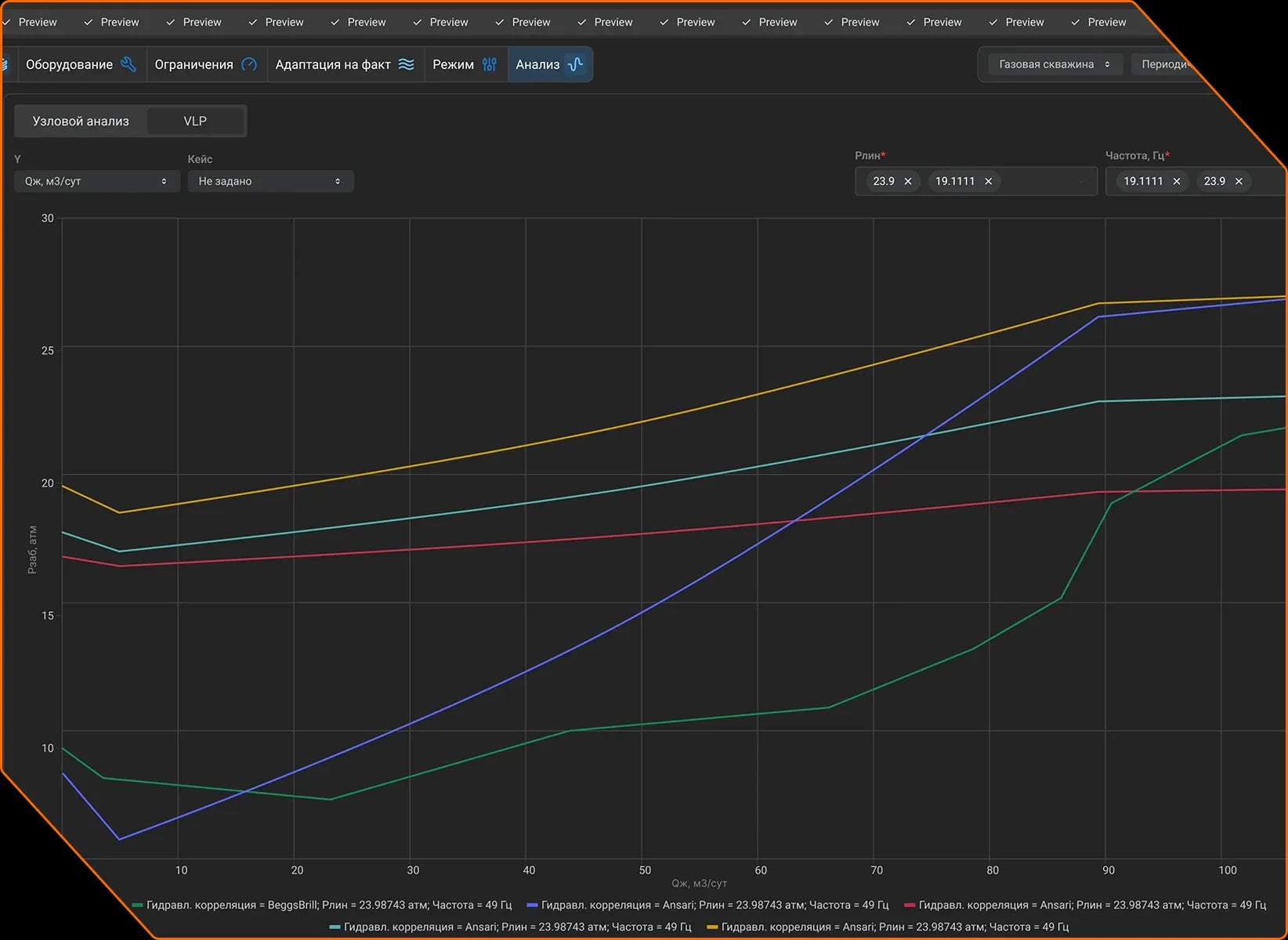
Sensitivity analysis: how parameters shift the VLP/IPR intersection

Sensitivity analysis shows what shifts the nodal point

Change the choke size, the bottomhole pressure or the water cut, and watch where the VLP and IPR curves now intersect. You compare each run against a baseline in a table and on a chart, so which parameter moves the operating mode is clear before anyone goes out to the well.

Isometric illustration: three engineers at laptops work on one well model inside the company perimeter, with their cursors visible on the model

Collaborative work in the browser

Well models sit in the company's own cloud perimeter. Several engineers work on the same model and see each other's edits straight away, with no emailing files back and forth.

Transient-mode modelling

Well control over time

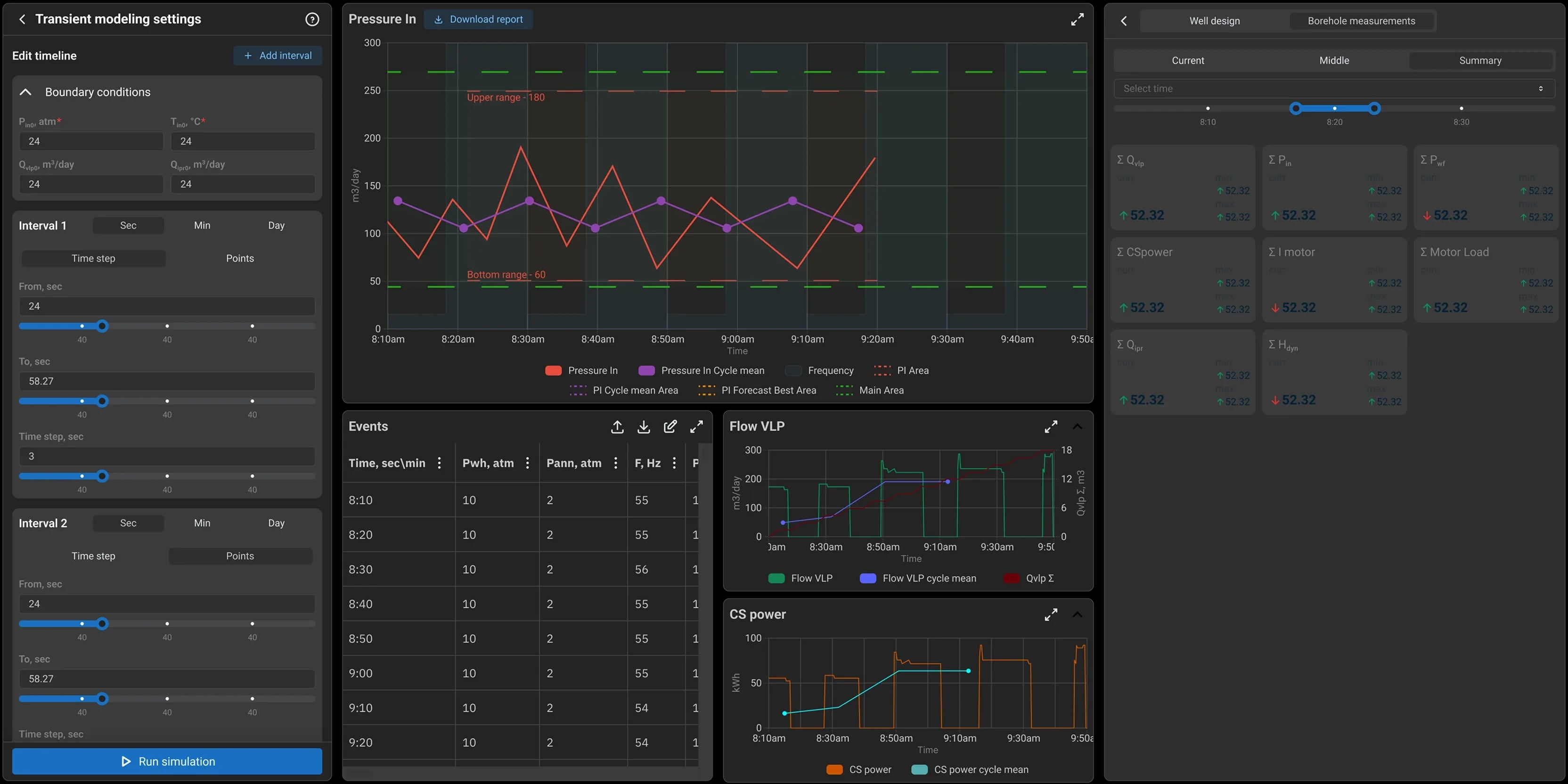
IDT Well calculates the well in transient operation, along with production decline rates. You set the schedule yourself: boundary conditions and events across several time intervals, with reservoir parameters changing over time.

Transient-mode modelling interface: timeline settings, event schedule and pressure, rate and power charts

95%

match on flow regime against reference commercial software for multiphase modelling

10 sec

to calculate a standard well model

7

lift methods in one model, including intermittent operation and flow through the annulus

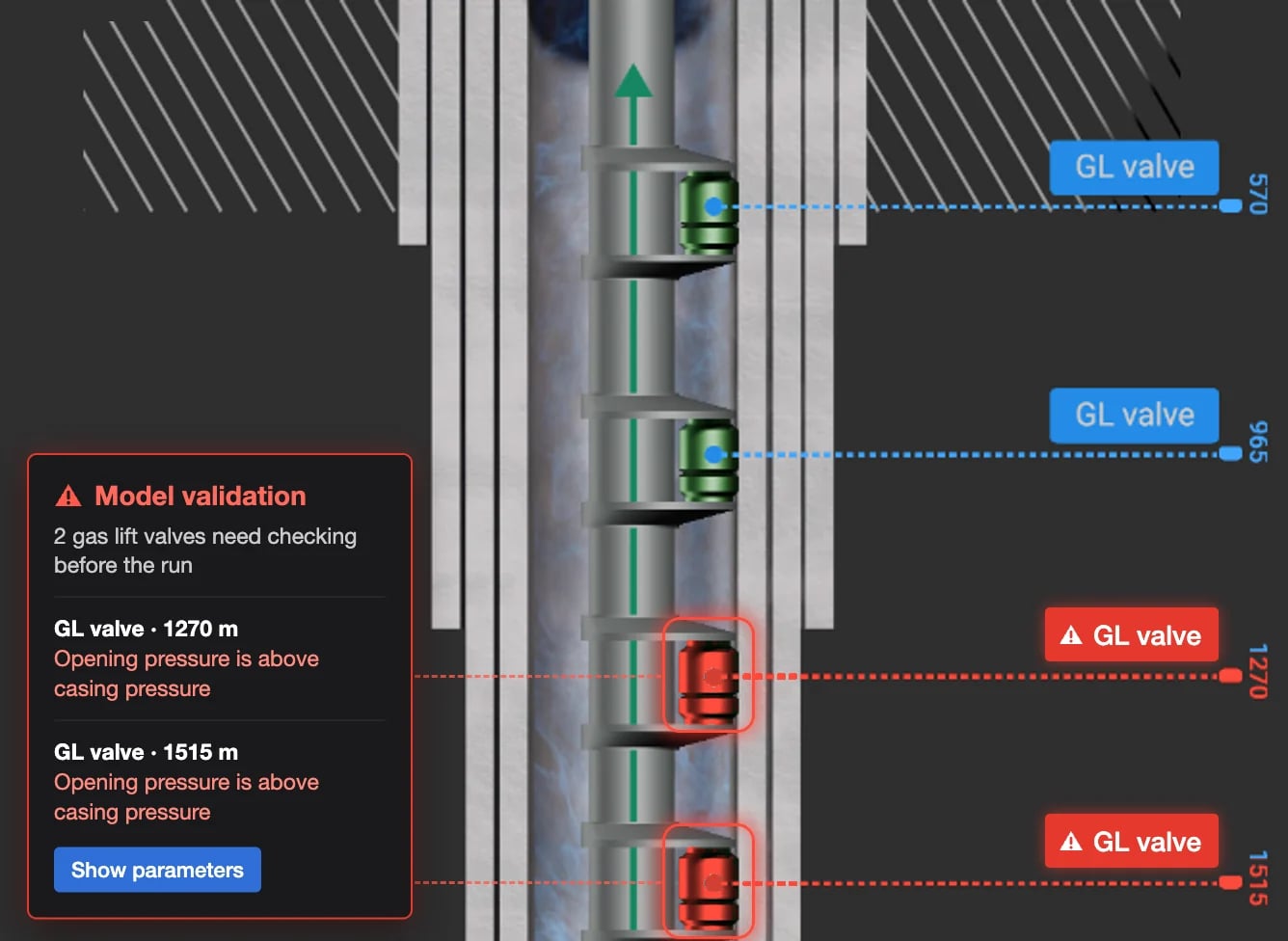
Well schematic in IDT Well: two gas lift valves highlighted in red, the validation panel reports opening pressure above casing pressure

The model won't let you calculate an impossible mode

Before running a calculation, IDT Well checks the well data: physics, equipment nameplate specs, process regulations. The check runs at every step of data entry. A value lands outside the allowed range and the engineer sees which parameter it is and what's wrong with it.

What this delivers

  • Less manual recalculation

    Adaptation to field data and end-to-end validation remove the routine work, so engineers spend time on decisions instead of preparing data.

  • Edit and calculate across a group of wells at once

    Parameters, PVT tables and model comparisons are updated for a chosen group of wells in one operation, with no re-entering data well by well.

  • Faster well ramp-up

    The optimal intermittent cycle and the post-kill ramp-up mode are calculated without a series of field trials.

  • One source of the operating mode for other systems

    Whatever IDT Well calculates is available to the dispatch system and other systems through the API right after the calculation.

Isometric illustration: a central block of IDT Well calculation modules linked to external systems

Microservice architecture with API integration

IDT Well is built from microservices: each calculation is a separate node with its own API. A dispatch system, a SCADA/PCS or a neighbouring IDT product asks for the well's operating mode directly and gets an answer, and the calculated model becomes available to adjacent systems right after the run. The solution embeds into the customer's infrastructure and gets extended for their tasks without touching the rest of the system.

Leave your contact details and we'll reach out

We'll set up a demo model for your well and show IDT Well's calculation core: nodal analysis, PVT calculation and adaptation to field data.

hello@industrial-dt.com+998 88 717 55 08@oil_gas_pt