Fig. 1Downhole equipment selectionHover a part · click to pin its card50 Hz · gas 8 % · intake module · head −7 % · Hdyn 810 m
Gas-lift valvesin service
Hover a part of the diagram: pump, valve, controller, pay zone. Click to pin its card.
Our engineers work on your tasks
We review difficult wells, select downhole equipment and audit the well stock. You get an engineering report with calculations and recommendations, and no licence for IDT products is needed for that.
We review the wells where the calculation disagrees with the field, find the cause of the deviation and the mode that removes it.
Diagnosing deviations
From telemetry, measurements, PVT properties and job history we find why the well has drifted from its mode.

Matching the model to field data
We bring the well model together with the measurements so that the calculation matches how the well actually runs.
The effect for a single well
For a specific well we calculate what a pump change, a change of mode, a near-wellbore treatment or a frac will give, before the work starts.

Complicated modes
We review wells with a high gas-oil ratio and free gas at the pump intake, slug flow and wax deposition. We work separately with cycling wells and with wells flowing through the annulus.
We select the assembly for the actual conditions of the well and check it as a whole in one model: the pump, the motor, the cable and the gas separator have to work together.

The pump
We select it against the catalogue and bench curves of the specific pump model, so the calculation uses its real performance.

The motor and the cable
We check the motor and the cable against temperature, length and power and make sure the parts of the assembly are compatible with each other.

Separators and dispersers
We determine what to put at the pump intake when the gas-oil ratio and the gas fraction at the intake rise, and how the head curve will change because of it.

Gas-lift valves
We calculate the spacing of the valves along the wellbore and the gas rate for the current mode of the well.
Hover a part of the diagram: pump, valve, controller, pay zone. Click to pin its card.
We calculate how much potential the stock holds and in which order to take it, so that every intervention is backed by numbers.
Express audit of the stock
Within 2-4 weeks of receiving the data we assess how much extra production the stock can give, what it will cost and which interventions are better to start with.
A programme of interventions
We put the interventions in order of priority and calculate the expected effect of each.
The case for interventions at approval
Before a frac, a treatment or a change of mode is approved, we prepare an independent estimate of the effect that the decision can rest on.
PVT models and material balance
We build PVT models, a block material balance and analytical models, on which all the other calculations rest.
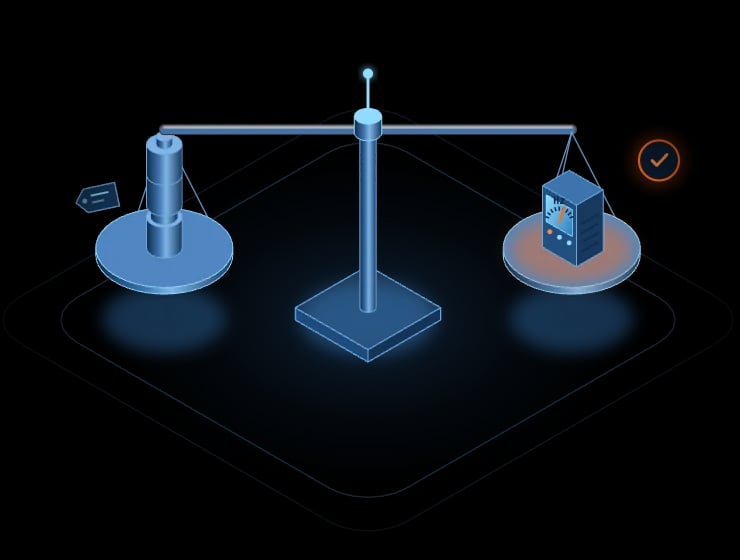
We do not make pumps, chemicals or drive cabinets, so we select them without a manufacturer's interest. If changing the frequency pays better than changing the pump, we will say so: we lose nothing by it.
1-3
days to review one well
2-4
weeks to work a pad
12
months of support on subscription
Describe the task and the data you have. We will agree on the question, the contents of the report and the timeline.
 hello@industrial-dt.com
 +998 88 717 55 08
 @oil_gas_pt
